Ocean health rarely gets the attention it deserves in plant-based and climate conversations, but reefs are quietly doing some of the heaviest lifting on the planet — feeding roughly a billion people, buffering coastlines from storms, and storing carbon in ways no terrestrial ecosystem can replicate. That's why the work of Anne Cohen, a marine scientist at the Woods Hole Oceanographic Institution, matters far beyond marine biology circles. Cohen has spent the last several years tracking down the rare reefs that somehow keep thriving when everything around them bleaches white — and what she's finding could reshape how we think about climate adaptation, food security, and conservation triage.
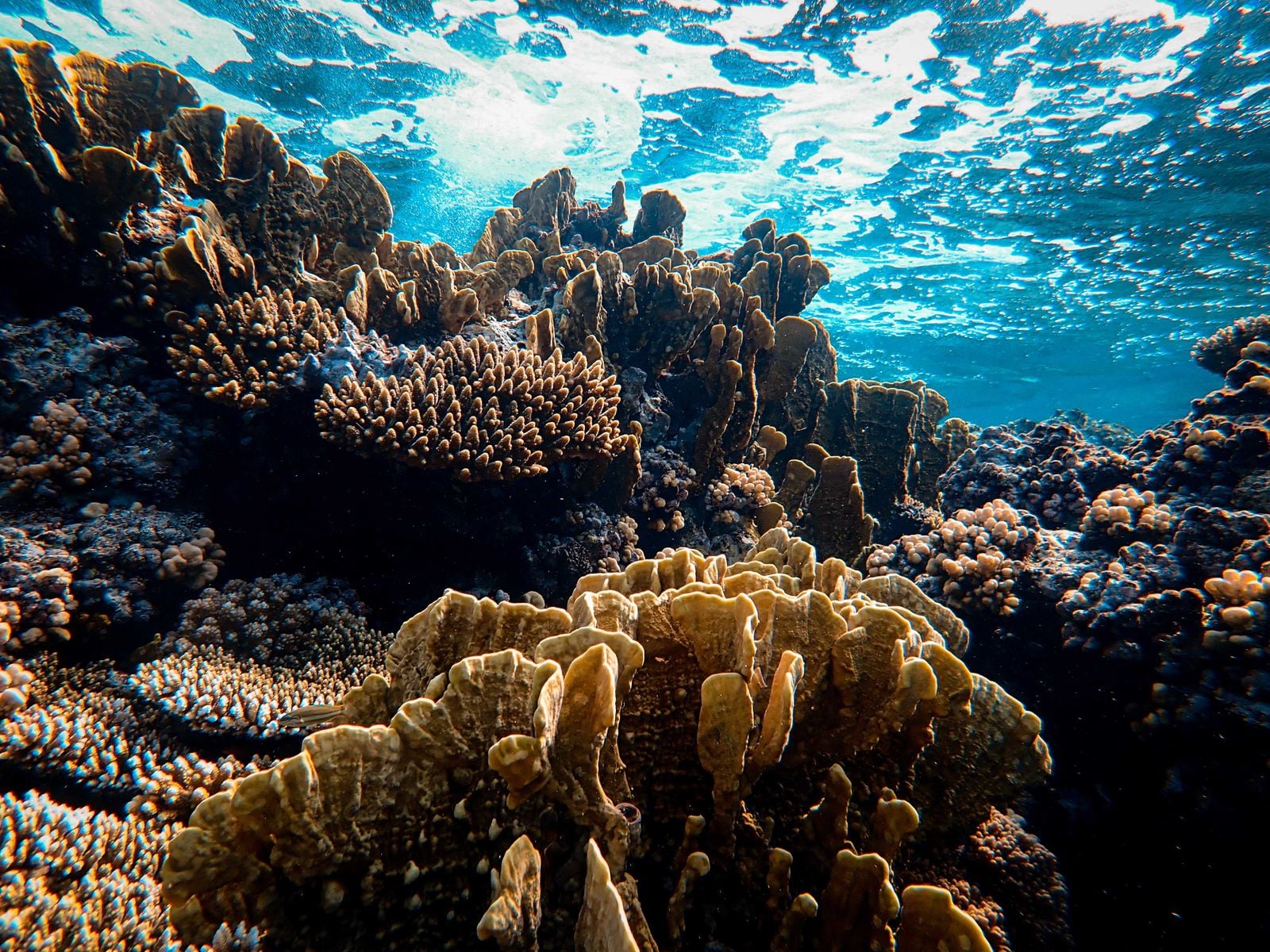
On a recent expedition to the Majuro lagoon in the Marshall Islands, Cohen documented towering tabletop corals and dense staghorn thickets stretching across the seafloor — a reef that appeared remarkably vibrant despite recent heat stress that has driven the most severe global coral bleaching event ever recorded, as reported by Inside Climate News. While more than 90 percent of tropical reefs could disappear within 25 years without intervention, the Majuro corals are doing something different — and Cohen's data suggests it isn't luck.
Her measurements point to two distinct resilience mechanisms working in tandem: genetic adaptation in coral populations that have been exposed to repeated heat stress, and local oceanographic conditions — cooler upwelling currents, deeper water mixing — that buffer temperature spikes. The Marshall Islands work changed Cohen's thesis because it showed both mechanisms operating at scale, not in isolated patches.
Cohen launched her Super Reefs project to track down these communities that appear to defy the odds. The effort has expanded into a joint global initiative with The Nature Conservancy and Stanford University focused on identifying heat-tolerant reefs and getting them formally protected. The team has prioritized places where governments are already invested in marine-protected areas: Belize, Hawaii and the Marshall Islands.
A super reef, by Cohen's definition, isn't simply a pretty patch that survived one bad summer. The reef has to show a scientifically demonstrated ability to withstand hotter temperatures over time — either through genetic adaptation or through local conditions like cooler currents — and it has to be capable of seeding other reefs. That last criterion matters because coral larvae can drift hundreds of miles, meaning a single resilient population can repopulate damaged neighbors if the ocean currents cooperate.
In Majuro, the stakes are not abstract. A 2021 World Bank analysis found that 40 percent of existing buildings in the Marshallese capital are endangered by rising seas, including several schools. Coral built these islands over millions of years. Now coral may be one of the few things capable of buffering them.
Cohen's longer ambition is a connected network of protected heat-tolerant reefs linking the Marshall Islands, Kiribati and Tuvalu across millions of square kilometers of Pacific ocean — a system whose offspring could replenish damaged populations across the region. It is a conservation strategy designed for the climate we already have, not the one we wish we still did.
The practical implications shift the playbook. For policymakers, it means redirecting marine-protection funding toward identified heat-tolerant reefs rather than spreading resources evenly across reefs unlikely to survive the next bleaching cycle. For readers tracking the broader story VegOut has covered around accelerating species collapse, it means the most useful climate donations right now may be to organizations like The Nature Conservancy's reef programs, and the most useful consumer pressure is on the human-controlled stressors that compound heat damage: agricultural runoff, single-use plastics, overfished seafood supply chains. Cutting demand for industrial seafood reduces destructive fishing pressure on the exact reefs Cohen is trying to protect. It's not a fix. It's triage with a plan — and unlike emissions, these are levers ordinary readers can actually pull this week.