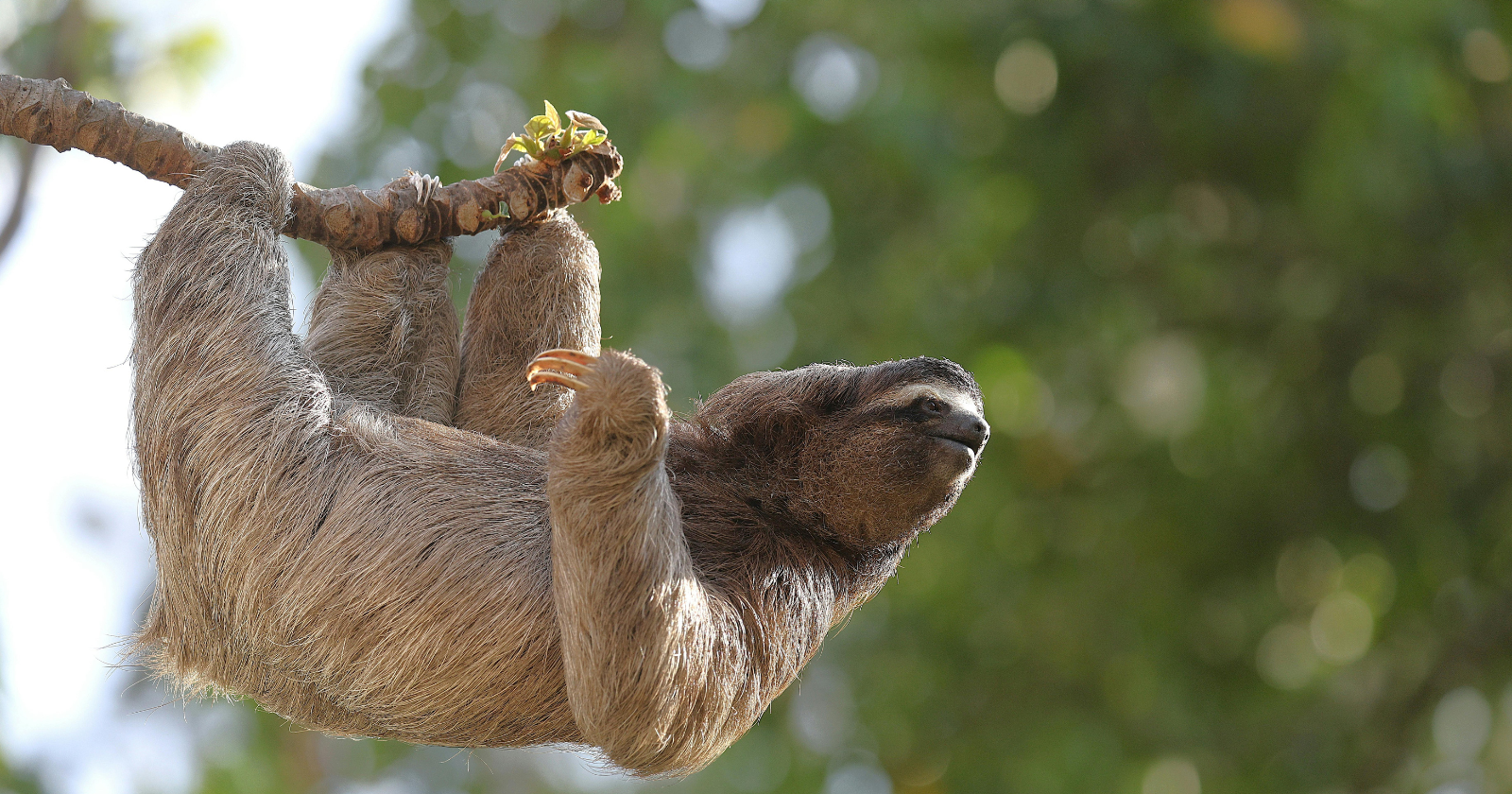
At a planned Florida sloth attraction earlier this year, the animals started dying — dozens of them. The deaths raised the obvious questions about animal welfare. They also raised a less obvious one: what were these animals carrying, and who was supposed to be checking? The answer, it turned out, was almost nobody.
That gap isn't a Florida problem. It's the structure of the global wildlife trade, which moves enormous numbers of live animals across borders every year. The conditions that produce spillovers aren't rare accidents. They're manufactured, repeated daily, and largely unregulated.
The conventional wisdom holds that pandemics are rare, random events. Bad luck. A freak spillover in a distant market. What the sloth case points to is something different: a trade that creates systematic opportunities for disease to move from animals to people.
"Pandemic roulette": a former CDC epidemiologist's warning
Dr. Neil Vora — a physician and epidemiologist who spent nearly a decade at the U.S. Centers for Disease Control and Prevention, including on the frontlines of Ebola outbreaks — has described the trade in stark terms. He told Inside Climate News, which obtained the necropsy records from the Florida case, that wildlife trading is inherently a system that can amplify pathogen risk. His blunter framing: the trade is a ticking time bomb that's "like pandemic roulette."
The mechanism is straightforward. Animals get shipped from one ecosystem to another, often by the thousands, crammed together with species they'd never meet in the wild. Pathogens that were once geographically contained start mixing. Some mutate. Some find a new host. Occasionally, one of those hosts is human.
Zoonotic diseases — illnesses that jump from animals to people — have driven a long list of consequential outbreaks: HIV/AIDS, multiple strains of influenza, West Nile virus, and, many scientists believe, COVID-19. The wildlife trade doesn't cause every spillover. But it dramatically increases the surface area where one can happen.
That isn't just intuition. In April 2026, a study in the journal Science analyzed 40 years of global trade records and found that traded mammals are roughly 1.5 times as likely to share pathogens with humans as mammals that aren't traded — and the longer a species stays in the trade, the more pathogens it tends to share.
The Florida sloth case that cracked the story open
The sloth deaths exposed a regulatory vacuum. When an exotic animal enters the United States, several agencies have partial jurisdiction. None has clear, comprehensive authority over the zoonotic disease risk that animal might be carrying.
The regulatory gap nobody owns
The U.S. Fish and Wildlife Service handles species protection. The USDA focuses on livestock and agricultural pests. The CDC monitors human disease. Customs handles borders. Each agency holds a piece. None holds the whole picture — a point made vivid when reporters asked who oversees zoonotic disease risk for imported wildlife and watched the agencies refer the question to one another.
That fragmentation is the story. A sloth imported for an attraction can arrive in Florida without anyone systematically testing it for pathogens that could affect humans or native wildlife. The animal clears customs. It enters a facility. If it dies, the cause may or may not be investigated. If it spreads something, the source may never be traced.
Multiply that by the enormous numbers of animals — legal and illegal — moving through global supply chains every year, and the scale of the blind spot comes into focus.
Private benefit, public cost
The basic structure here is familiar: the exotic pet industry, roadside attractions, and traffickers profit, while the costs — disease surveillance, outbreak response, ecological damage, human illness — get socialized onto public health systems and taxpayers. The wildlife trade is one of the higher-stakes examples, because the public cost can include a pandemic.
What this means for how we think about prevention
Pandemic prevention tends to get framed as a problem of better vaccines, faster sequencing, smarter surveillance. All of that matters. But it's downstream of the spillover event.
Upstream prevention looks different. It means reducing the number of unnatural animal-to-animal and animal-to-human contacts in the first place. That points directly at the wildlife trade — and at the food systems, exotic pet markets, and traditional medicine supply chains that drive demand.
It also points at consumer choices in ways that are uncomfortable to discuss. The demand side of the wildlife trade is real people buying real things. Some of it is subsistence. A lot of it is not.
What happens next
Cases like these rarely produce sweeping federal reform on their own. The story tends to surface, generate outrage, prompt a narrow fix — Florida issued a temporary ban on sloth imports after the deaths — and then fade. The underlying regulatory architecture stays the same.
What could shift the conversation is a clearer assignment of responsibility. If one agency owned zoonotic disease risk for imported wildlife, with the authority to test, quarantine, and refuse entry, the system would look different. Whether that agency should be the CDC, the USDA, or a new entity is a political question. The public health question is whether anyone owns it at all.
For readers, the takeaway is less about policy than about pattern recognition. The next pandemic, whenever it arrives, will probably not feel random in hindsight. It will look like the predictable outcome of a system that moves enormous numbers of animals around the planet without checking what they're carrying.